
Film capacitor know-how.
Engineering articles from HYDRA, maker of film capacitors in Jičín (Czech Republic) and Da Nang (Vietnam).
Designing a motor circuit
Building an inverter or drive
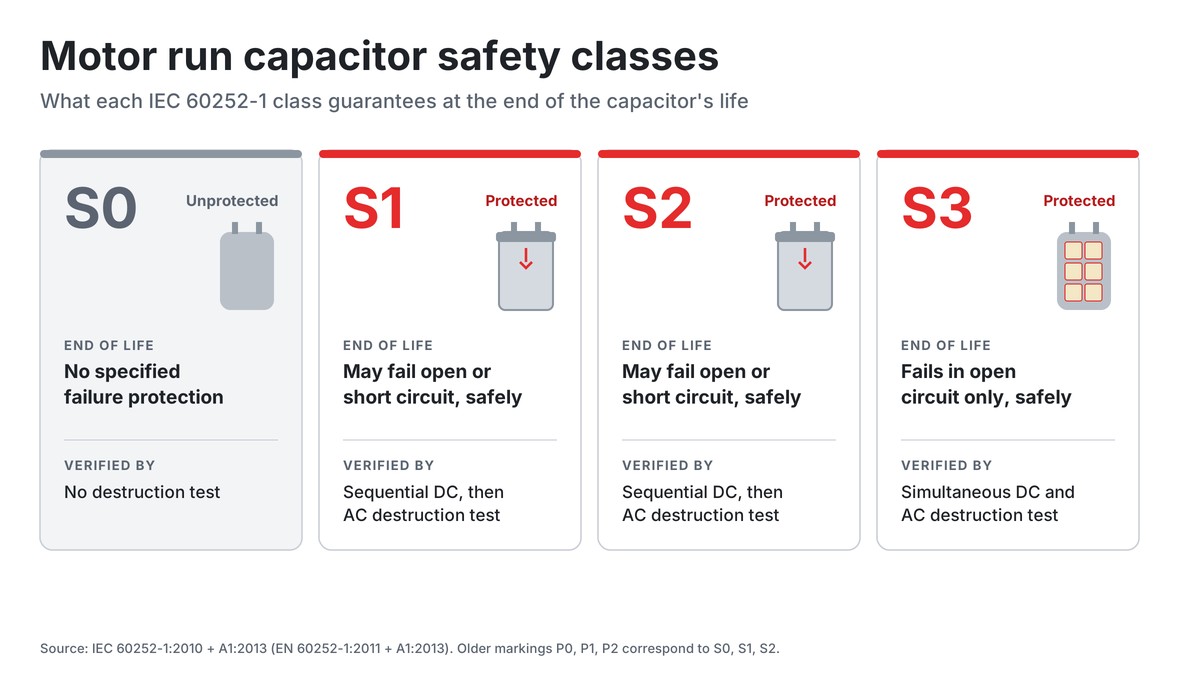
Motor Run Capacitor Safety Classes S0 to S3: How to Specify Failure Protection under IEC 60252-1
What S0, S1, S2 and S3 mean for motor run capacitors under IEC 60252-1, how the protection works and how to choose the right class.
Motor run & start
Selecting, rating and replacing run and start capacitors for motors, compressors, pumps and HVAC.
Motor Run Capacitor Safety Classes S0 to S3: How to Specify Failure Protection under IEC 60252-1
What S0, S1, S2 and S3 mean for motor run capacitors under IEC 60252-1, how the protection works and how to choose the right class.
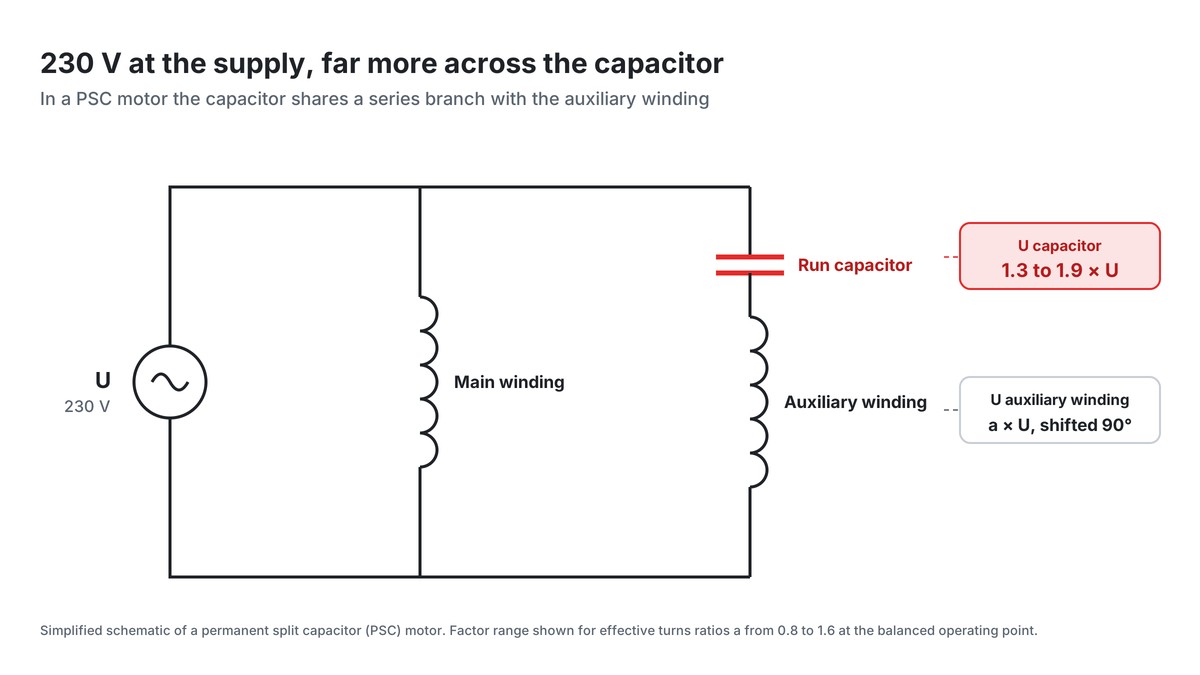
Choosing the Rated Voltage of a Motor Run Capacitor: Why the Working Voltage Exceeds the Mains
Why a run capacitor on 230 V mains sees more than the supply, what IEC 60252-1 asks and how to measure the working voltage before choosing a rating.
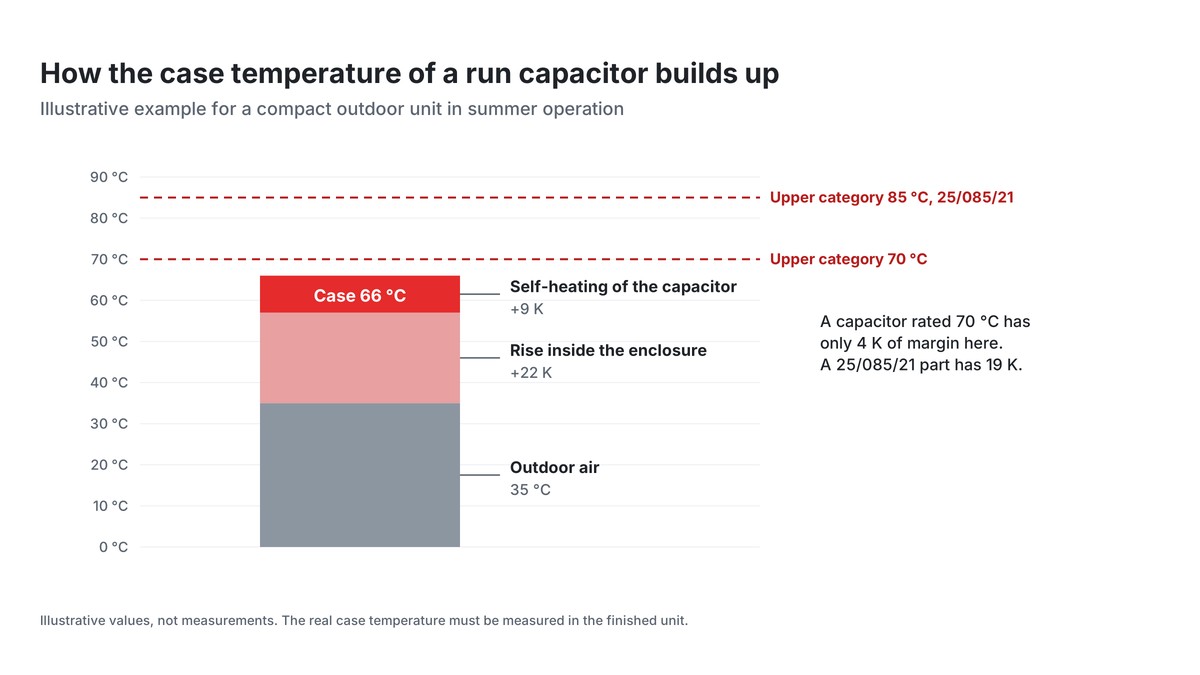
Motor Capacitors in Heat Pumps and HVAC: Hot Spot, Duty Cycle and Life Class
Why run capacitors in heat pumps and air conditioners fail from heat and hours, and how case temperature, duty cycle and life class decide service life.

Motor Start Capacitors: Duty Cycle, Switching Count and Film Versus Electrolytic
How IEC 60252-2 rates motor start capacitors by duty cycle, why the switching device matters, and how film compares with AC electrolytic types.
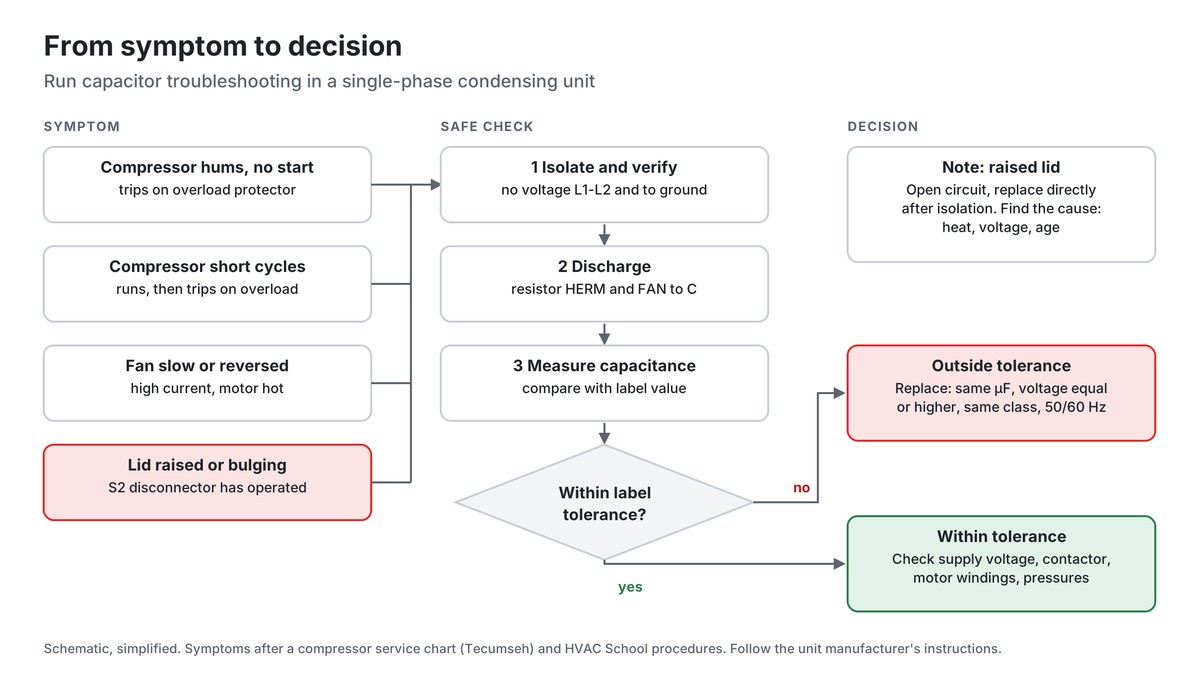
Why Air-Conditioner Run Capacitors Fail, and How to Choose a Replacement
Why AC run capacitors fail, how to measure them safely and how to choose a replacement: capacitance, voltage, class of operation, safety class and fit.
Power factor correction
Sizing and operating PFC capacitors and capacitor banks on 50 Hz and 60 Hz networks.
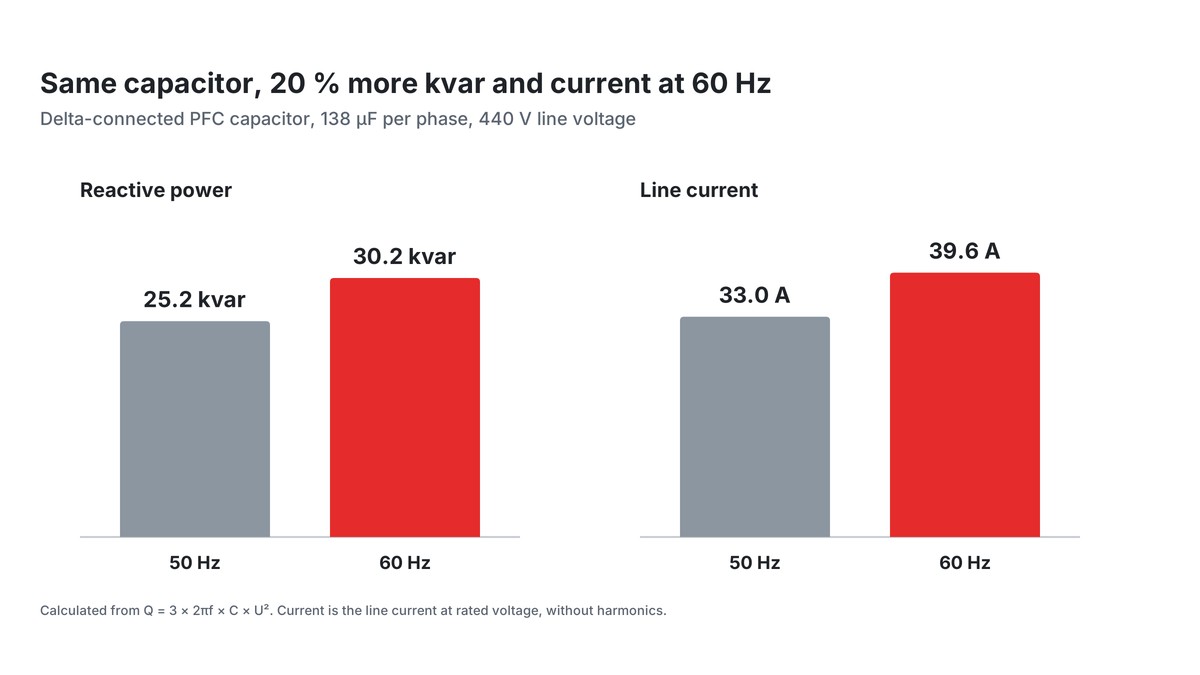
PFC Capacitors at 50 Hz and 60 Hz: The Same Capacitor, a Different kvar Rating
Why a PFC capacitor delivers 20 % more kvar and current at 60 Hz, how it shifts network resonance and why 50 Hz detuned steps end up mistuned at 60 Hz.

Inside a PFC Capacitor Bank: Filling, Inrush Current, Contactors and Discharge
Oil or nitrogen filling, back-to-back inrush current, capacitor contactors with damping resistors, discharge time and fusing in a low voltage PFC bank.

Does a Capacitor Cut Your Electricity Bill? Power Factor Correction Facts for Modern Loads
Why a capacitor does not cut a household bill, when power factor correction pays on commercial tariffs, and why drives and LEDs need more than capacitors.
DC link & power electronics
Film capacitors for DC link and AC filter duty in inverters, drives and data center power.

Replacing Electrolytic Capacitors with Film in the DC Link: A Practical Checklist
When film capacitors can replace electrolytics in the DC link: the sizing criterion, three quick calculations and a checklist for the change.
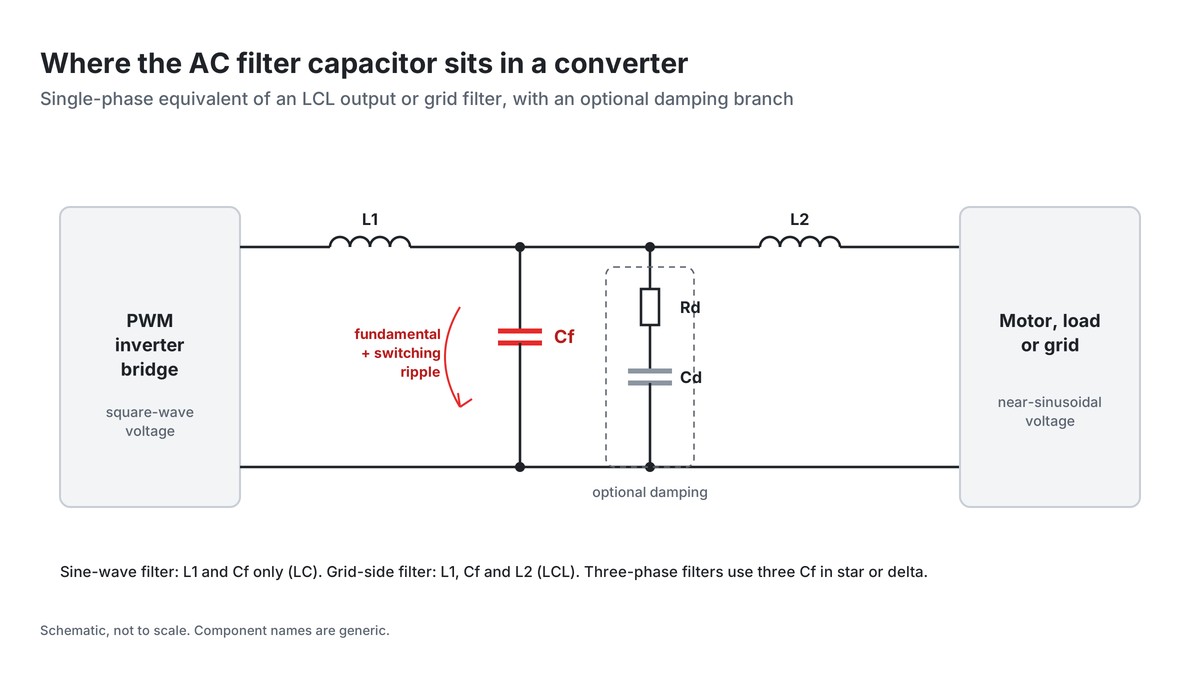
AC Filter Capacitors for Inverters and UPS: What IEC 61071 Asks For
Why AC filter capacitors in inverters and UPS fall under IEC 61071, and how to estimate current with harmonics, losses and hot-spot temperature.
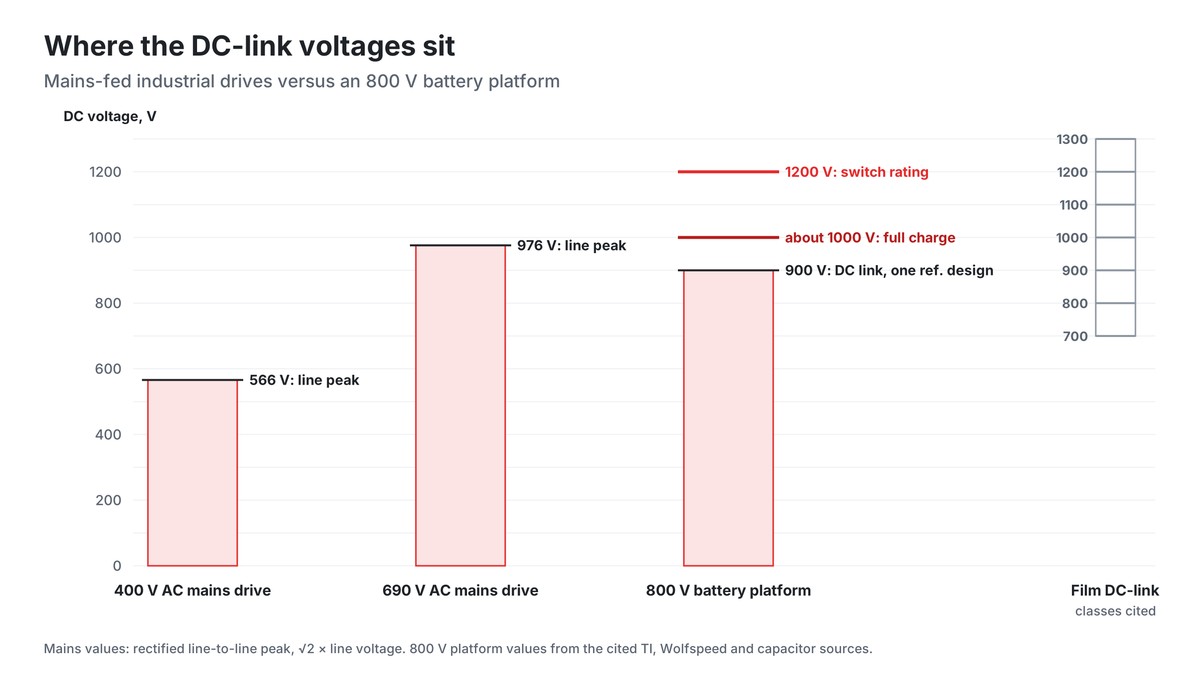
DC-Link Film Capacitors for 800 V SiC Drives: Voltage, ESL and the 105 °C Barrier
DC-link film capacitors for 800 V SiC drives: voltage class, ESL and overshoot, ripple current and ESR heating, and the 105 °C limit of polypropylene.
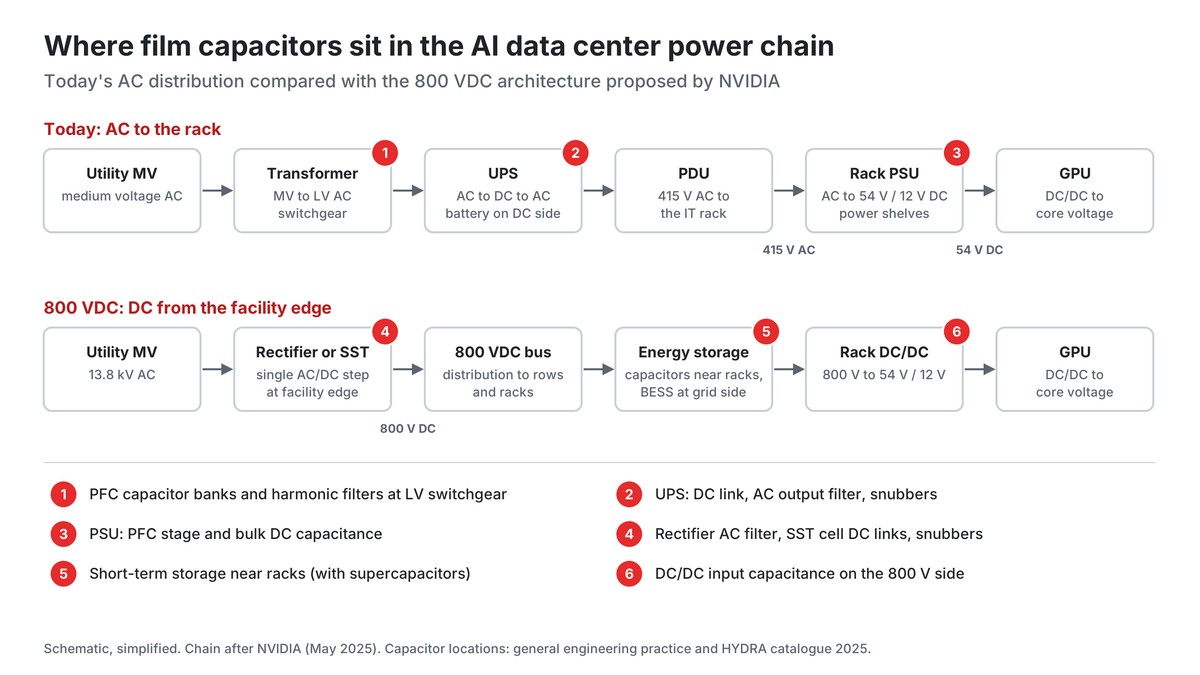
Film Capacitors in AI Data Center Power: From 800 VDC Distribution to Power Quality
Where film capacitors sit in AI data center power chains, from 800 VDC and SST to UPS and PFC, and why a DC link bridges only microseconds of a load step.
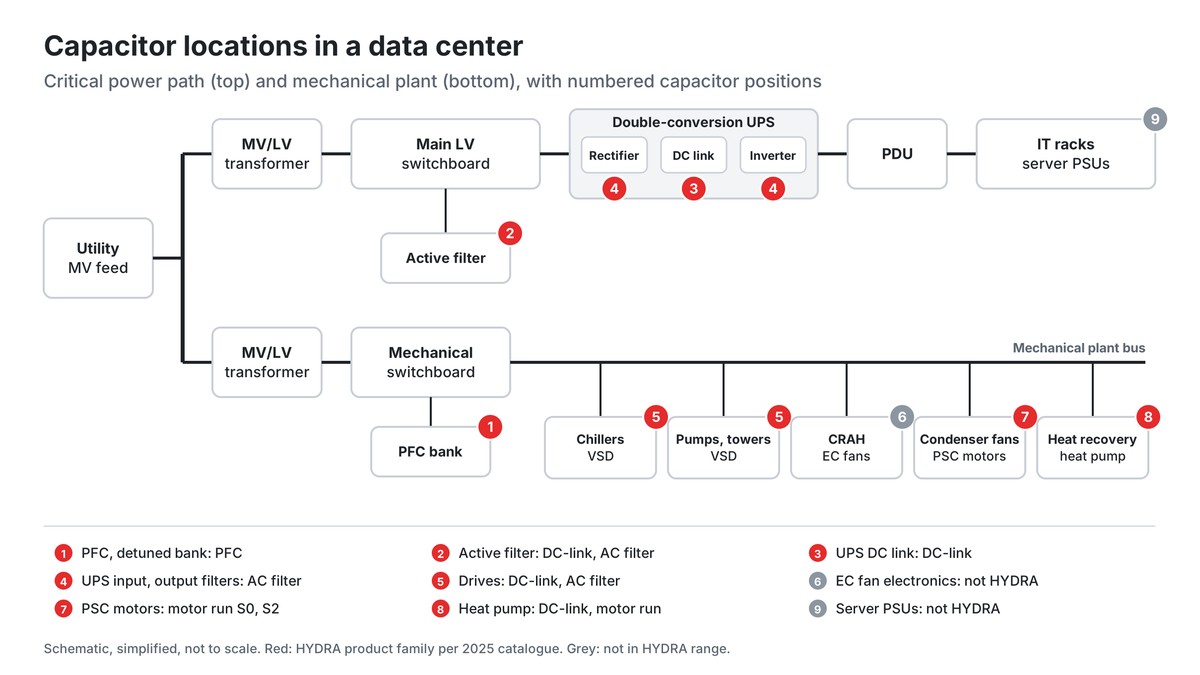
Where Film Capacitors Work in a Data Center: From the Utility Feed to the Cooling Plant
Where film capacitors work in a data center, from PFC banks and UPS DC links to drives and motor run capacitors in the cooling plant, with sizing examples.
Reliability & materials
Lifetime, sealing, impregnation and the films that capacitors are made from.

Vegetable Oil, Resin or Gas: How Impregnation and Sealing Decide Film Capacitor Life
How moisture and trapped gas age metallized film capacitors and how oil filling, resin potting, gas filling and sealing decide their service life.
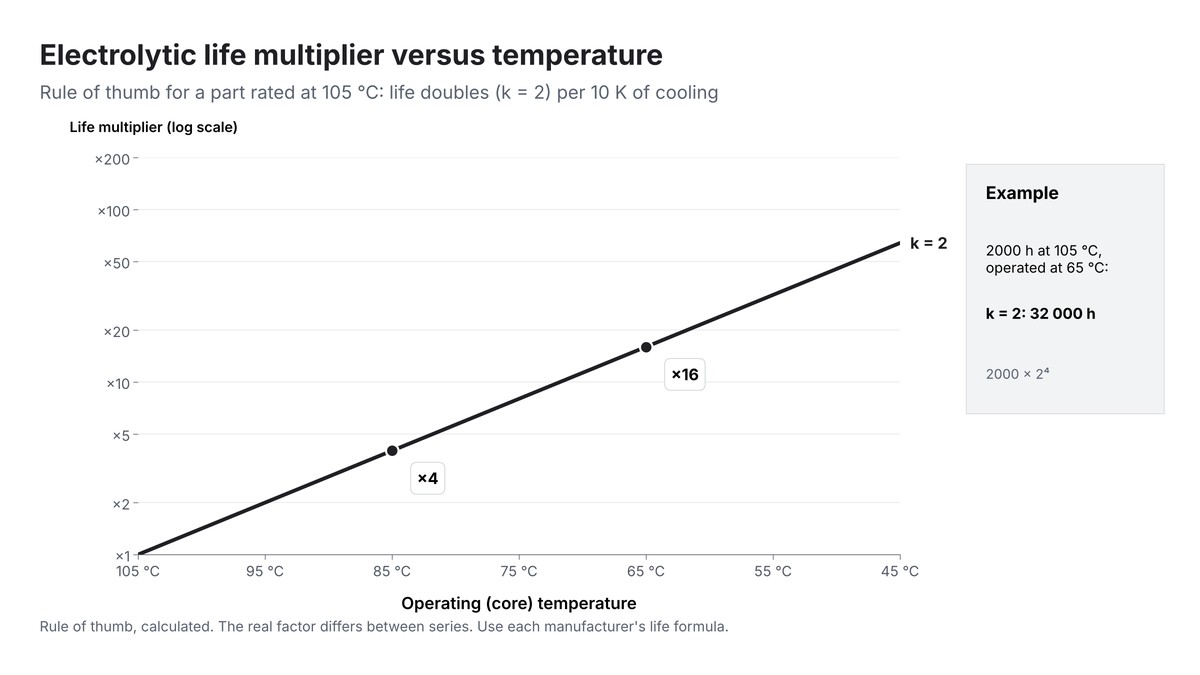
Wear-Out Versus Self-Healing: Why Film and Electrolytic Capacitors Age Differently
Why aluminium electrolytic capacitors wear out while metallized film capacitors self-heal, what life figures mean and how to compare them fairly.
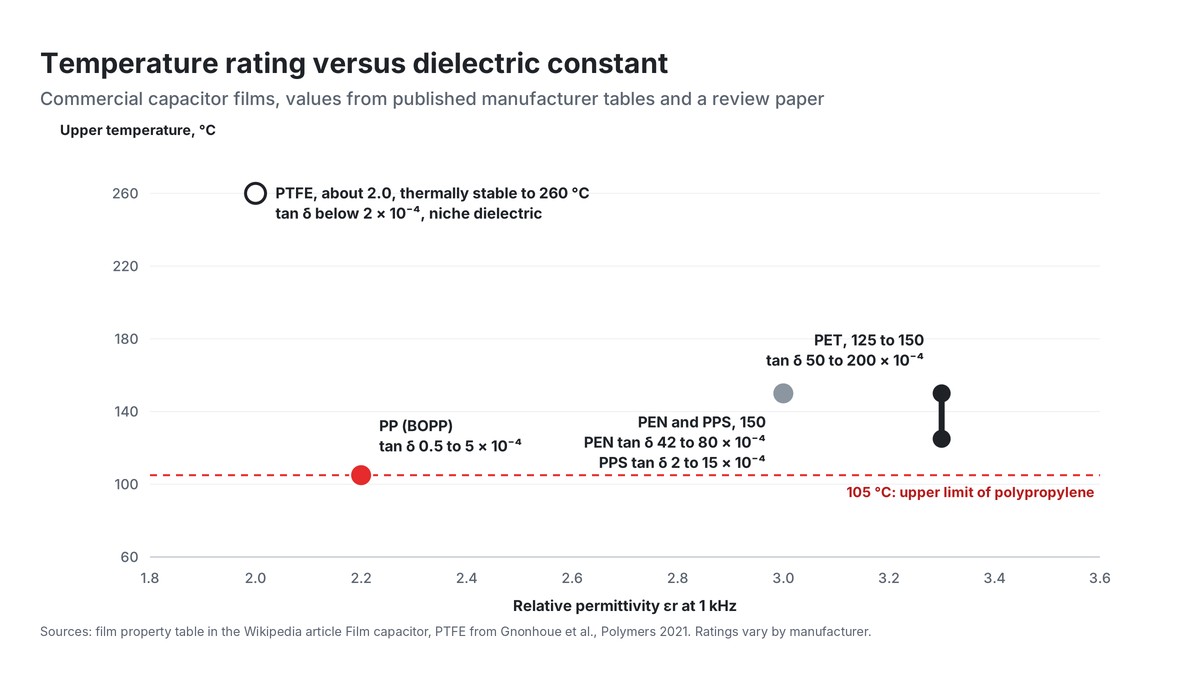
Beyond 105 °C: The Limits of BOPP and the Next Generation of Capacitor Films
Why BOPP film capacitors stop at about 105 °C, how PET, PEN, PPS and PTFE compare, and which high-temperature dielectrics are commercial or in the lab.

From Resin to Roll: The Capacitor-Grade Polypropylene Film Supply Chain
How capacitor-grade polypropylene film is made, where supply is concentrated, which capacity expansions were announced and what to ask your supplier.
Standards, compliance & sourcing
Approval marks, material compliance, supply chain and how to avoid counterfeit parts.
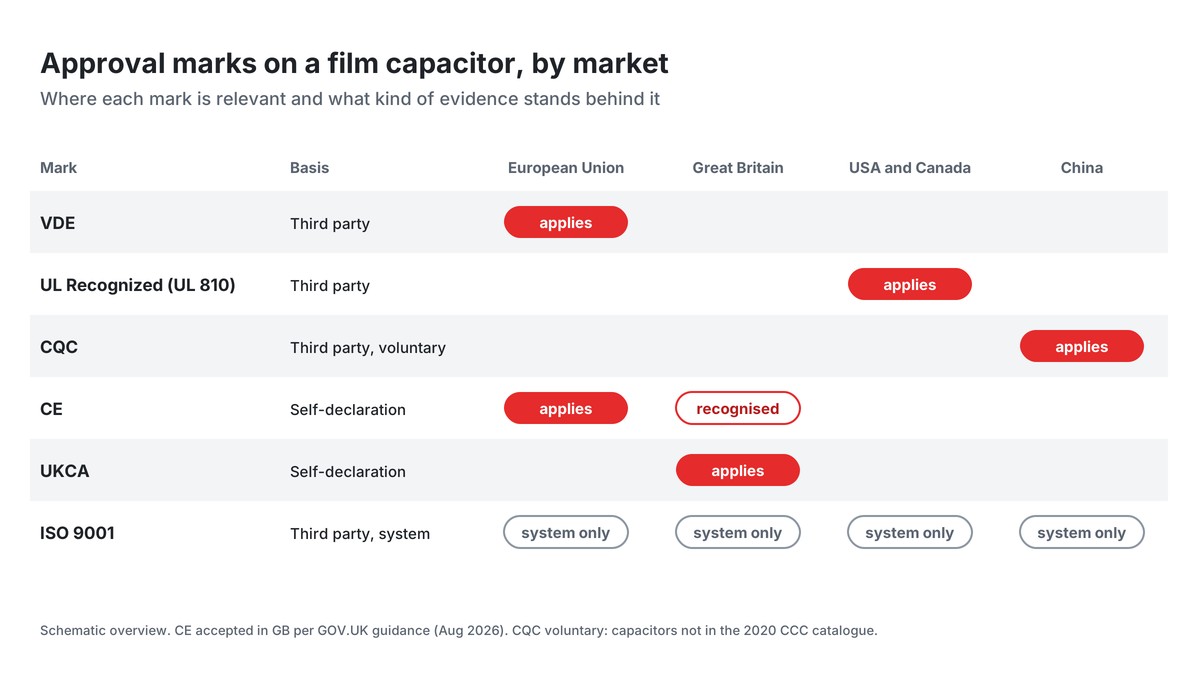
VDE, UL 810, CQC, UKCA: Reading the Approval Marks on a Film Capacitor
What the VDE, UL 810, CQC, CE and UKCA marks on a film capacitor prove, who issues them and how to check that a certificate is genuine and valid.
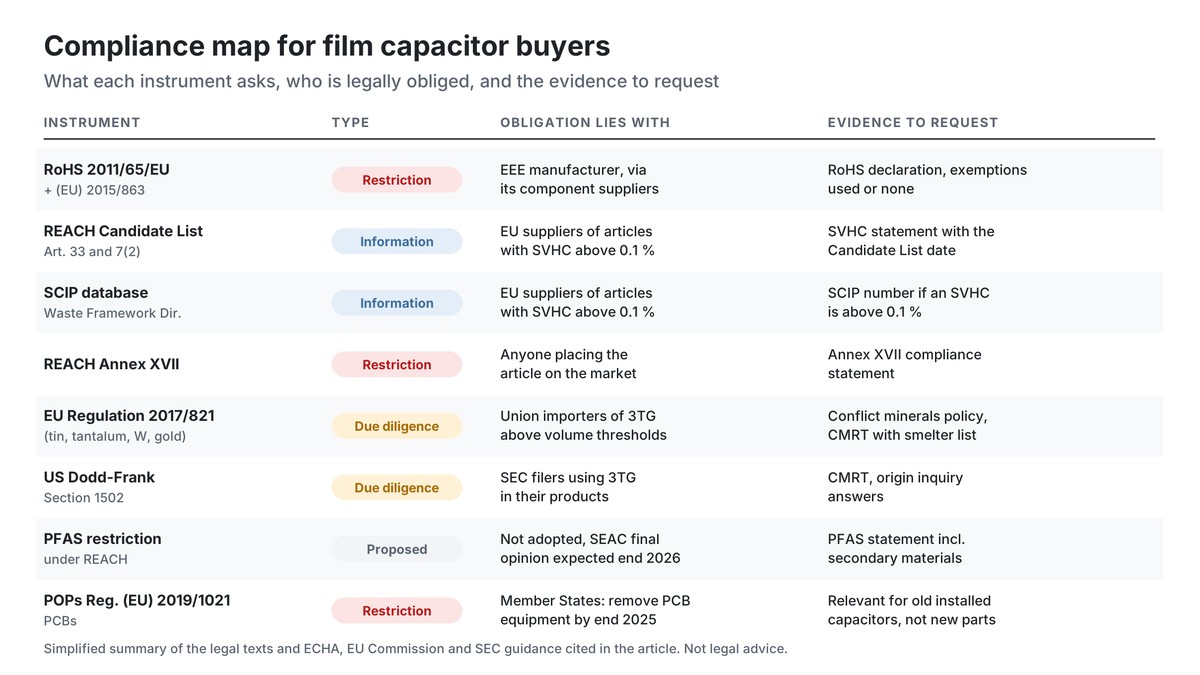
RoHS, REACH, Conflict Minerals and PFAS: A Compliance Map for Film Capacitor Buyers
Which RoHS, REACH, SCIP, conflict minerals and PFAS rules apply to film capacitors, who is obliged and which documents a buyer should request.
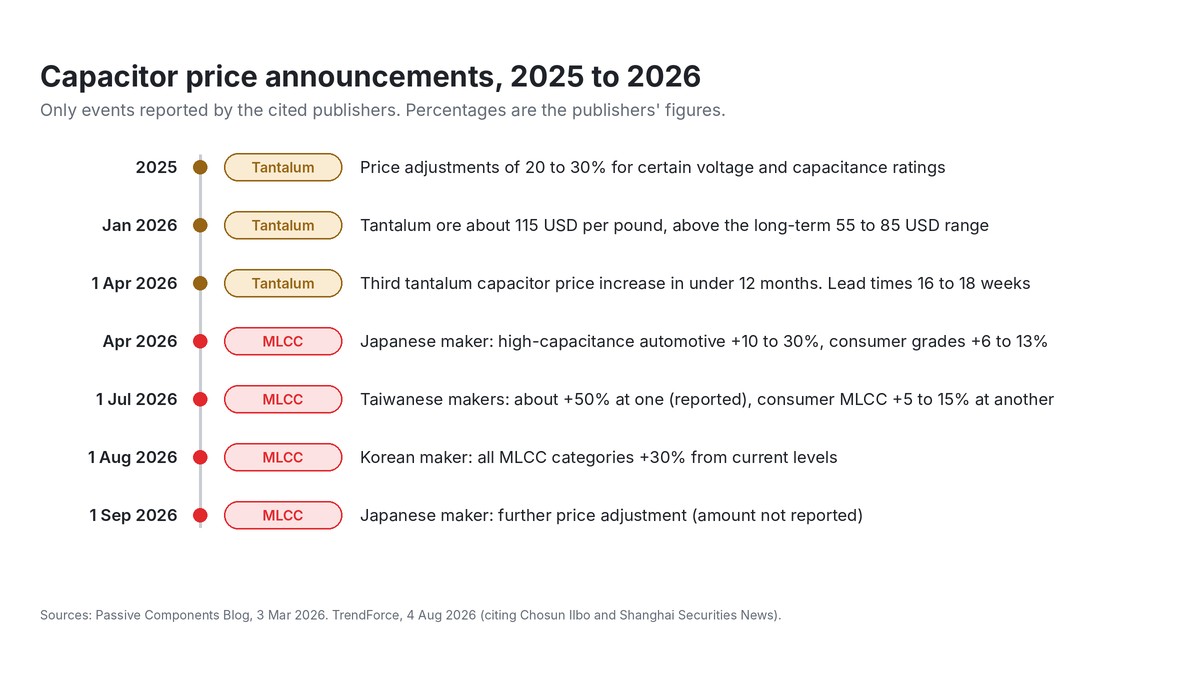
The 2026 Capacitor Price Shock: MLCC and Tantalum Shortages and Where Film Capacitors Fit
MLCC and tantalum prices rose in 2025 and 2026 on AI demand. Where film capacitors are a valid alternative, where not, and how to build supply resilience.
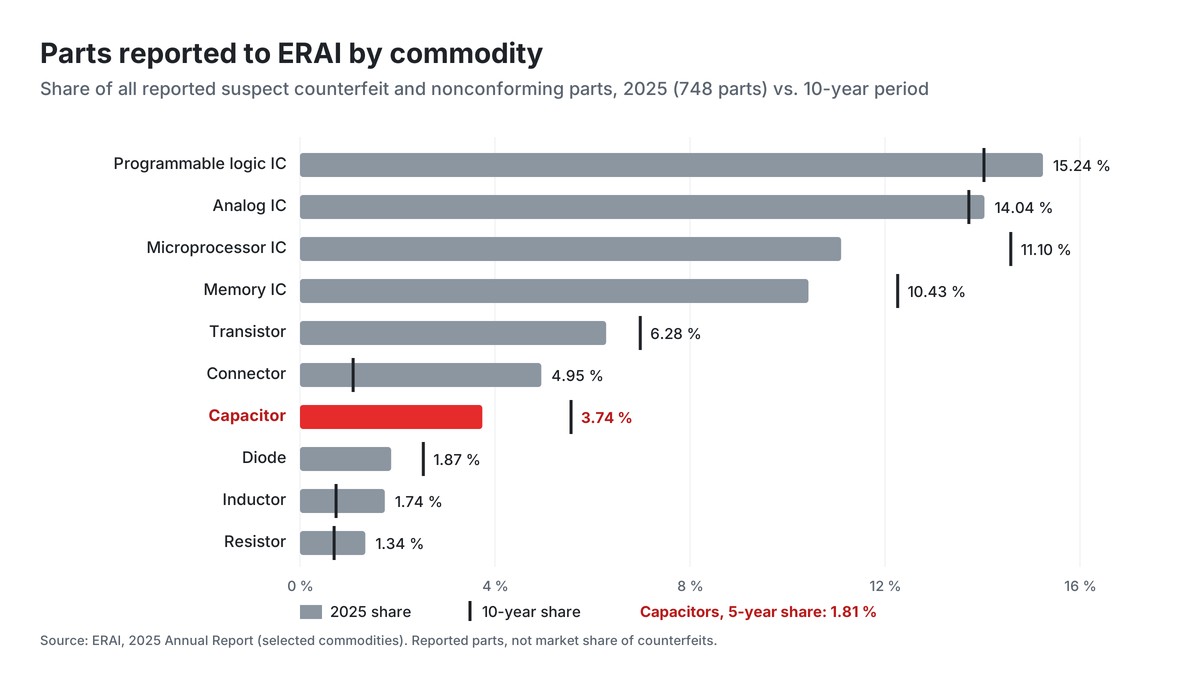
Counterfeit and Substandard Capacitors: How to Spot Them and Protect Your Supply
How common counterfeit capacitors are, which forms they take, which SAE standards apply and how to inspect film and motor run capacitors before use.
Ask a HYDRA engineer
Send us your application data and our engineers will help you choose the right film capacitor. HYDRA has made film capacitors since 1899, with production in Jičín (Czech Republic) and Da Nang (Vietnam).
Ask an engineerCheck stock